Nepal Election 2026: Everything Trekkers and Volunteers Need to Know about
The Traveler’s Guide to the March 2026 Nepal Election: Safety, Logistics, and What to Expect
If you are packing your bags for Nepal this March, you are arriving during one of the country’s most vibrant times. The rhododendrons are blooming, the mountain views are crisp, and the weather is pleasantly warm.
But this year, there is an extra buzz in the air.
With the General Election confirmed for March 5, 2026, Nepal is entering a pivotal moment. For volunteers and travelers, this adds a layer of complexity to logistics, but it also offers a unique window into the democratic spirit of this resilient nation.
Whether you are heading to a remote village to volunteer or trekking to Everest Base Camp, here is your in-depth guide on what to expect, how to stay safe, and how to navigate the election period.
The Big Picture: What is Happening in Nepal?
After a period of political transition and the dissolution of parliament in late 2025, Nepal is holding early general election on Thursday, March 5, 2026.
While election in many countries are just a day of voting, in Nepal, they are a major event. The entire country effectively shuts down for 24 to 48 hours. The atmosphere is often festive, but it can also be unpredictable.
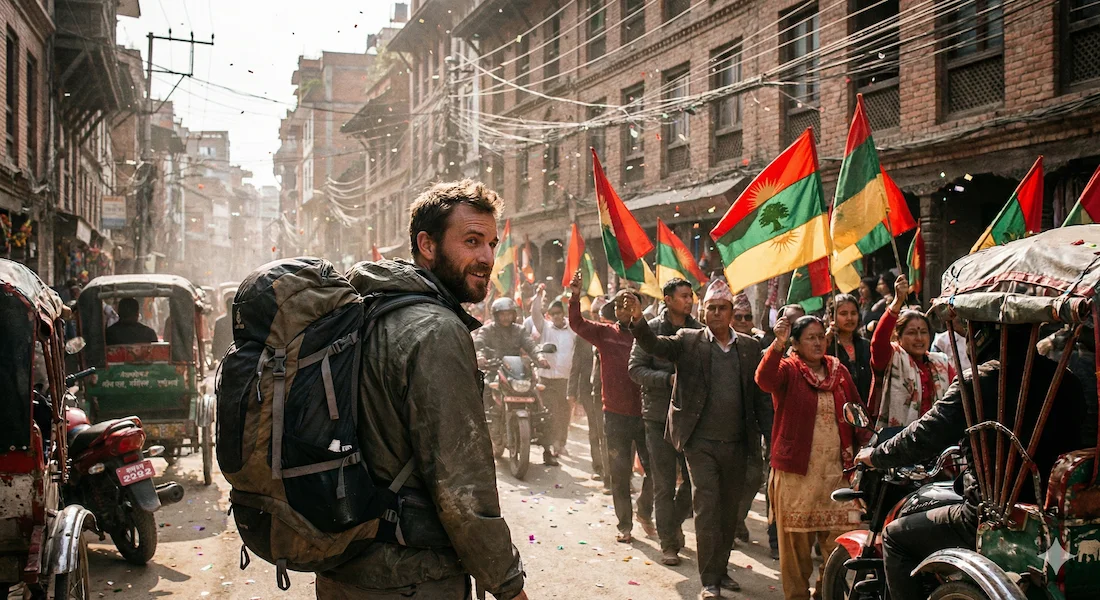
- The “Nepal Bandh” (Shutdown) Effect
The most immediate impact you will feel is the restriction on movement.
Vehicle Bans: On Nepal Election Day (March 5), private and public vehicles are typically banned from the roads to prevent voter fraud and violence. This means no taxis, no buses, and no rickshaws.
- Tourist Exceptions: In previous election, the Nepal Tourism Board and Tourist Police have issued special passes for tourist vehicles (green plate vehicles) to transfer passengers between the airport and hotels. However, these are not guaranteed for simple sightseeing.
- The “Silence Period”: For 48 hours before voting begins, campaigning is forbidden. This usually means a drop in noise, but alcohol sales are often banned during this window.
Pro Tip: Do not plan any inter-city travel (e.g., Kathmandu to Pokhara) on March 4th or 5th. Stay put in one location and enjoy the quiet streets.
- Impact on Logistics & Transport
If your itinerary is tight, the election will require you to be flexible.
Flights
- International: International flights usually operate as normal. However, getting to Tribhuvan International Airport (TIA) can be tricky due to the vehicle ban.
- Domestic: Domestic flights (Kathmandu to Lukla, Pokhara, etc.) are famously unreliable even on good days. On Election Day, expect domestic flights to be suspended or severely limited as staff need to vote and security protocols are heightened.
Trekking Routes
- The Trails are Open: The good news? Politics rarely climbs above 3,000 meters. If you are already on the Annapurna Circuit or in the Khumbu (Everest) region, you will barely notice the election. Teahouses will remain open.
- The Challenge: Getting to the trailhead. If you plan to start your trek on March 5, you likely won’t be able to get a jeep or bus to the starting point.
- A Guide for Volunteers
For those coming to volunteer, your experience will be slightly different than the average tourist. You are often embedded in communities where politics is a passionate topic.
Project Delays
- Project Closures: During the election period, particularly on March 4th and 5th, most of our projects will be closed. Volunteers can take advantage of this relaxing day by either staying at their homestay or planning a short day hike around their placement.
Cultural Sensitivity
- Neutrality is Key: As a foreigner, you must remain strictly neutral. Do not wear t-shirts or hats with political symbols (even if you think they are just cool designs—symbols like the Sun, Tree, or Sickle & Hammer have deep political meaning).
- Avoid Debates: Nepalis love talking politics, but emotions can run high. Listen curiously, but avoid offering strong opinions or criticisms of the process.
- Safety Protocols: Is it Dangerous?
Generally, Nepal is very safe for tourists. However, election periods bring a “heightened risk” of small-scale unrest.
- Avoid Rallies: In the days leading up to March 5, you will see motorcycle rallies and street processions. Do not join them. While usually peaceful, clashes between rival youth wings can happen spontaneously.
- March & Beyond: What Happens After?
The days following the election (March 6–10) can be just as interesting.
- Vote Counting: This can take days or weeks. As results trickle in, there may be “victory rallies” which block roads. Traffic jams are common.
- Celebratory Atmosphere: If the result is accepted peacefully, the mood is often jubilant. It’s a great time to chat with locals about their hopes for the future.
Summary Checklist for March 2026 Travelers
| Category | Action Item |
| Itinerary | Ensure you have zero travel planned for March 5th. Treat it as a rest day. |
| Airport | If flying out on March 5th, arrange transport in advance. |
| Supplies | Stock up on cash (ATMs may run dry) |
| Communication | Every things works so no need to worry |
| Mindset | Patience. Things will run on “Nepali Time” more than usual. |
Final Thoughts
Don’t let the election scare you off. Visiting Nepal during a democratic exercise is a privilege. You will see a side of the country that most tourists miss—the passion, the hope, and the civic pride of the Nepali people.
If you want to learn more about the election you can visit nepal government official election page Here